Datasets
The four multiclass problems used to validate the logic replicant, and how the nucleosynthesis data was augmented.
The four problems the logic replicant was tested on, in everyday words.
Four very different problems
Parity
Eight switches; the answer says whether an odd number of them are on. A perfect rule with no exceptions, and a nightmare for methods that rely on resemblance. Results.
Down syndrome in mice
The levels of 77 proteins in mice that do or do not carry a Down-syndrome-like condition, given a drug or a placebo, under two learning protocols. A real, noisy system. Results.
Nucleosynthesis
Which nucleus comes out of a step in the reactions that power stars. Very few examples, strict laws. Results.
Handwritten digits
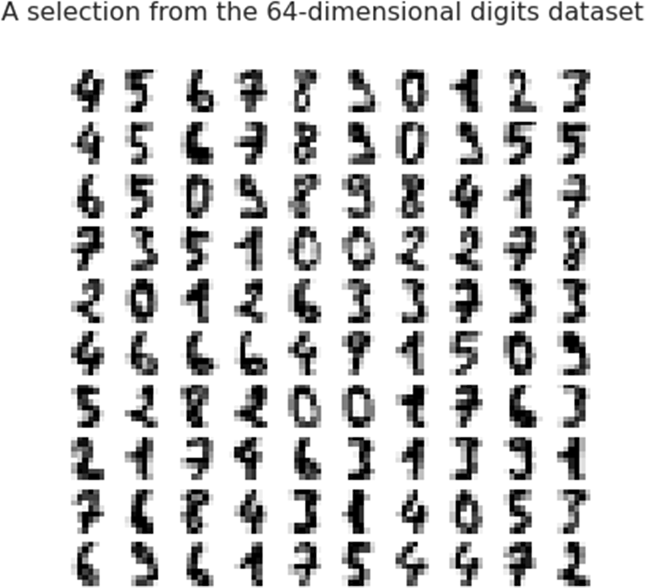
Tiny 8-by-8 pictures of digits written by 43 people. A classic benchmark where mainstream methods already do well. Results.
Making more examples out of 23 reactions
Twenty-three reactions is very little to learn from, so two facts of physics were used to generate more valid examples without inventing anything. First, a nucleus left alone stays itself. Second, every nuclear reaction is equally valid run backwards in time. Finally, each product of a reaction becomes its own question: given the ingredients and the other products, which nucleus is missing? This yields about 209 examples.
Overview
| Problem | Instances | Features | Classes | Nature of the logic | Source |
|---|---|---|---|---|---|
| Parity function (8-bit) | 256 (all \(2^8\) inputs) | 8 binary | 2 | Compact, deterministic, no exceptions | GitHub |
| Mouse model of Down syndrome | 1080 | 77 protein expression levels | 8 | Organic; a main logic with secondary factors | figshare |
| Nucleosynthesis | 23 reactions, augmented to 209 instances | Reactants and residuals | 17 isotopes | Deterministic physical law | GitHub |
| Optical recognition of handwritten digits | 1797 | 64 (8×8 pixels, 0–15) | 10 | Variable, perceptual; 43 writers | UCI |
All datasets are collected at github.com/pedrocorral/logic-replicant-datasets.
Parity function
The parity function \(f\colon\{0,1\}^N\mapsto\{0,1\}\) returns 0 when the input has an even number of ones and 1 otherwise; formally, the solution of \(\boldsymbol{x}\cdot\boldsymbol{x}=2n+m\), \(n\in\mathbb{N}\), \(m\in\{0,1\}\), gives \(f(\boldsymbol{x})=m\). It has special importance in Boolean function theory and circuit complexity. The 8-bit version yields the 256 instances of the dataset, generated by a small script. Switching one input flips the output, which destroys the non-linear separability that similarity-based models rely on.
Mouse model of Down syndrome
Trisomy 21 produces Down syndrome, affecting about one in 1000 human births. Higuera, Gardiner and Cios (2015) measured 77 proteins in Ts65Dn mice, a partial-trisomy model, and control mice under context fear conditioning, with and without the drug memantine, which rescues learning in trisomic mice. Their S1 dataset has 1080 records and 8 classes formed by three binary attributes: genotype (control c or trisomy t), stimulation to learn (context-shock CS, where mice explore a new cage and are then shocked, or shock-context SC, where they are shocked immediately and then allowed to explore) and memantine (injected m or saline s). It is a real, noisy problem whose logic admits exceptions, chosen also because vortices per class can reveal subgroups.
Nucleosynthesis
A multiclass problem with 17 classes whose logic responds purely to the basic forces of physics creating new atomic nuclei by fusion and fission. The dataset contains the empirical reactions of the four branches of the carbon–nitrogen–oxygen (CNO) cycle and the three hot CNO cycles observed in stars, novae and X-ray bursts: 23 records after removing duplicates. The classes are the isotopes \({}^1\mathrm{H}\), \({}^4\mathrm{He}\), \({}^{12}\mathrm{C}\), \({}^{13}\mathrm{C}\), \({}^{13}\mathrm{N}\), \({}^{14}\mathrm{N}\), \({}^{15}\mathrm{N}\), \({}^{14}\mathrm{O}\), \({}^{15}\mathrm{O}\), \({}^{16}\mathrm{O}\), \({}^{17}\mathrm{O}\), \({}^{18}\mathrm{O}\), \({}^{17}\mathrm{F}\), \({}^{18}\mathrm{F}\), \({}^{19}\mathrm{F}\), \({}^{18}\mathrm{Ne}\), \({}^{19}\mathrm{Ne}\). The full reaction list is on the appendix page.
Augmentation
Twenty-three reactions is very little to learn from, so two facts of physics were used to generate more valid examples without inventing anything. First, an isotope that is left alone stays itself, which gives one trivial example per class. Second, every nuclear reaction is equally valid run backwards in time, which doubles the list. Finally, each product of a reaction becomes its own question: given the ingredients and the other products, which nucleus is missing? This yields about 209 examples per split.
With 23 instances, the set was enlarged with two physically rigorous principles. (1) Conservation of the quantum state in the absence of external interaction: an isotope that does not react remains itself, adding one identity instance per class (17). (2) Time reversibility of quantum-mechanical systems: each reaction is equally valid reversed, predicting sources from outcomes (23 more). Then, from every original and augmented reaction, each nuclide of the outcome becomes one instance, with the input side and the remaining outcome elements (nuclei, particles, radiation, energy) given as residuals. For example, from \({}^{17}_{8}\mathrm{O}+{}^{1}_{1}\mathrm{H}\to{}^{14}_{7}\mathrm{N}+{}^{4}_{2}\mathrm{He}+1.19\,\mathrm{MeV}\) one instance predicts \({}^{14}_{7}\mathrm{N}\) given the input and residuals \({}^{4}_{2}\mathrm{He}+1.19\,\mathrm{MeV}\), and another predicts \({}^{4}_{2}\mathrm{He}\) given residuals \({}^{14}_{7}\mathrm{N}+1.19\,\mathrm{MeV}\). The result is 204 training and 5 test instances per split.
Optical recognition of handwritten digits
1797 digits written by 43 people, normalised into 8×8 matrices whose pixel values are integers in \([0,15]\), publicly available at the UCI repository. The goal is to infer the digit from the image. Variability between writers, and even within one writer, makes the logic less concrete than the parity function; the classification logic must cover an area of variability per class and define the limits between classes, some of which are ambiguous even for a person.